China Shipping Restrictions 2025: The Definitive "Can I Ship This?" Guide

Noel Murphy
Logistics Expert & Ecommerce Consultant
2024-12-10
Navigate China's complex shipping restrictions with this comprehensive 2025 guide. Learn what's banned, what's grey area, and how to stay compliant with US CBP, EU ICS2, and UK customs regulations.
I've been shipping products out of China for over a decade, and I'll tell you straight: the question "Can I ship this from China?" is one I hear at least three times a day. And honestly? The answer changes constantly. What was perfectly fine to ship last quarter might now be sitting in customs detention, costing you thousands in storage fees whilst you scramble for paperwork.
Here's the truth—shipping restrictions from China in 2025 are the most complex they've ever been. Between US CBP's Type 86 crackdown, the EU's ICS2 Release 3 rollout, and China's own export controls tightening, there's a minefield of regulations that can turn profitable shipments into expensive disasters. Let me walk you through exactly what you can and absolutely cannot ship, based on real-world experience from our Shenzhen facility processing thousands of shipments monthly.
⚠️ Quick Summary: The "Kill List" – High-Risk Items
Before we dive deep, here are the items most likely to get your shipment seized, detained, or rejected outright:
🚫 Universally Banned
- • Counterfeit/branded goods
- • Flammable liquids (alcohol >24%)
- • Weapons & weapon parts
- • Ivory & endangered species
- • Narcotics & drug precursors
⚠️ High-Risk "Grey Area"
- • Lithium batteries (need IATA DGR 66)
- • Liquids >100ml
- • Powders (white powders = instant flag)
- • Magnets (strong rare-earth types)
- • E-cigarettes & vaping products
Section 1: The "Hard No" List – Universal Bans
These items are banned by international conventions, Chinese export laws, or destination country import regulations. Attempting to ship them will result in immediate seizure, potential legal action, and possible criminal charges:
1.1 Dangerous Goods (IATA Class 1-9)
🔥 Flammable & Explosive Materials:
- • Aerosols: Spray paints, compressed air, deodorants (butane propellant)
- • Flammable liquids: Perfumes with >24% alcohol, nail polish remover (acetone), lighter fluid
- • Explosives: Fireworks, ammunition, gunpowder, flares
- • Oxidising agents: Hydrogen peroxide >3%, bleach concentrates
Why it matters: These violate IATA Dangerous Goods Regulations. Airlines refuse them, and attempting to misdeclare them is a criminal offence.
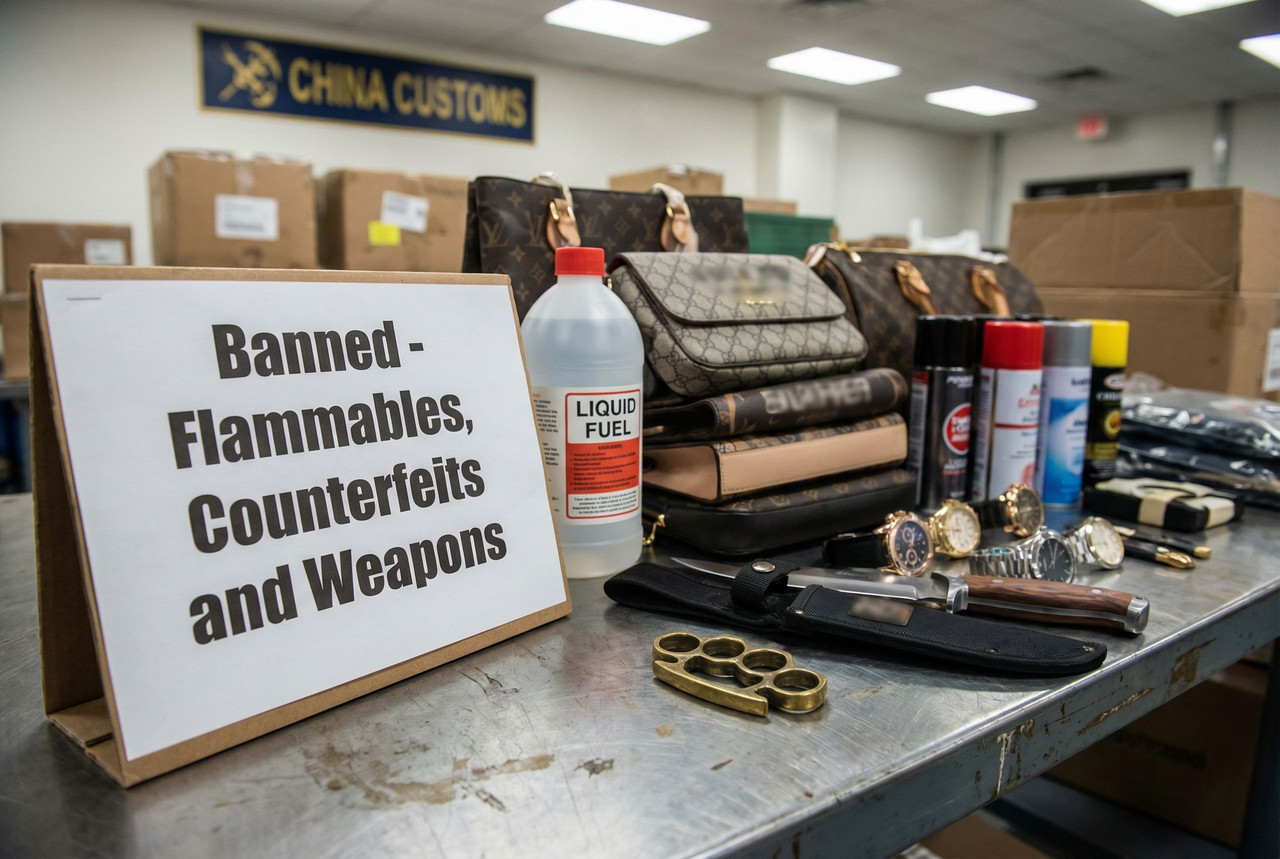
Common banned items: flammables, counterfeits, and dangerous goods
1.2 Counterfeit & Intellectual Property Violations
🚨 Trademark & Copyright Infringements:
- • Fake branded goods: "Nike" shoes without authorisation, "Louis Vuitton" bags, "Disney" toys
- • Pirated media: Copied software, pirated movies/music, bootleg books
- • Patent violations: Products copying patented designs without licensing
- • Logo misuse: Using brand logos on unauthorised merchandise
Real example: US CBP seized $1.3 billion in counterfeit goods in 2024, with China accounting for 76% of seizures. Even if you didn't know they were fake, YOU are liable for the violation.
💡 Grey Area: Genuine Branded Goods
Even real branded products can trigger customs issues if you lack proof of authorisation. If you're dropshipping genuine Nike shoes, customs may still seize them assuming they're counterfeit unless you have purchase invoices from authorised distributors. This is why reputable dropshipping fulfilment centres avoid branded goods entirely—the risk isn't worth it.
1.3 Legally Restricted Items
⚖️ Items Banned by International Law:
- • Weapons & parts: Guns, knives (over legal blade length), brass knuckles, tasers
- • Narcotics & precursors: Any controlled substances, chemicals used in drug manufacturing
- • Endangered species products: Ivory, tortoiseshell, certain animal furs (CITES violations)
- • Radioactive materials: Even low-level radioactive items like vintage watch dials
- • Biological agents: Viruses, bacteria, toxins, medical waste
Section 2: The "Grey Area" – Items That Need Special Handling
These items aren't universally banned, but they require specific documentation, packaging, or carrier approval. Shipping them incorrectly causes delays, additional fees, or rejection:
2.1 Lithium Batteries – The IATA DGR 66 Challenge
Lithium batteries are the #1 compliance issue I see with ecommerce sellers. Since the IATA DGR 66th Edition (2025 regulations), requirements have tightened significantly:
✅ What's Required for Shipping Lithium Batteries:
- 1. UN38.3 Test Certification: Battery must pass UN safety testing (drop test, thermal test, vibration test). Your supplier should provide this—if they can't, don't ship it.
- 2. Correct Classification:
- • UN3481: Lithium-ion batteries contained in equipment (phones, laptops)
- • UN3480: Standalone lithium-ion batteries
- • Separate rules for lithium metal batteries (UN3090/UN3091)
- 3. Proper Packaging (Section II requirements):
- • Individual protection for each battery (blister pack, plastic sleeve)
- • Non-conductive materials between batteries
- • Maximum package limit: 5kg net battery weight for air shipping
- 4. Correct Labeling: Lithium battery handling label (black/white diamond) must be affixed to outer package
- 5. Documentation: Shipper's Declaration for Dangerous Goods (if required by carrier)
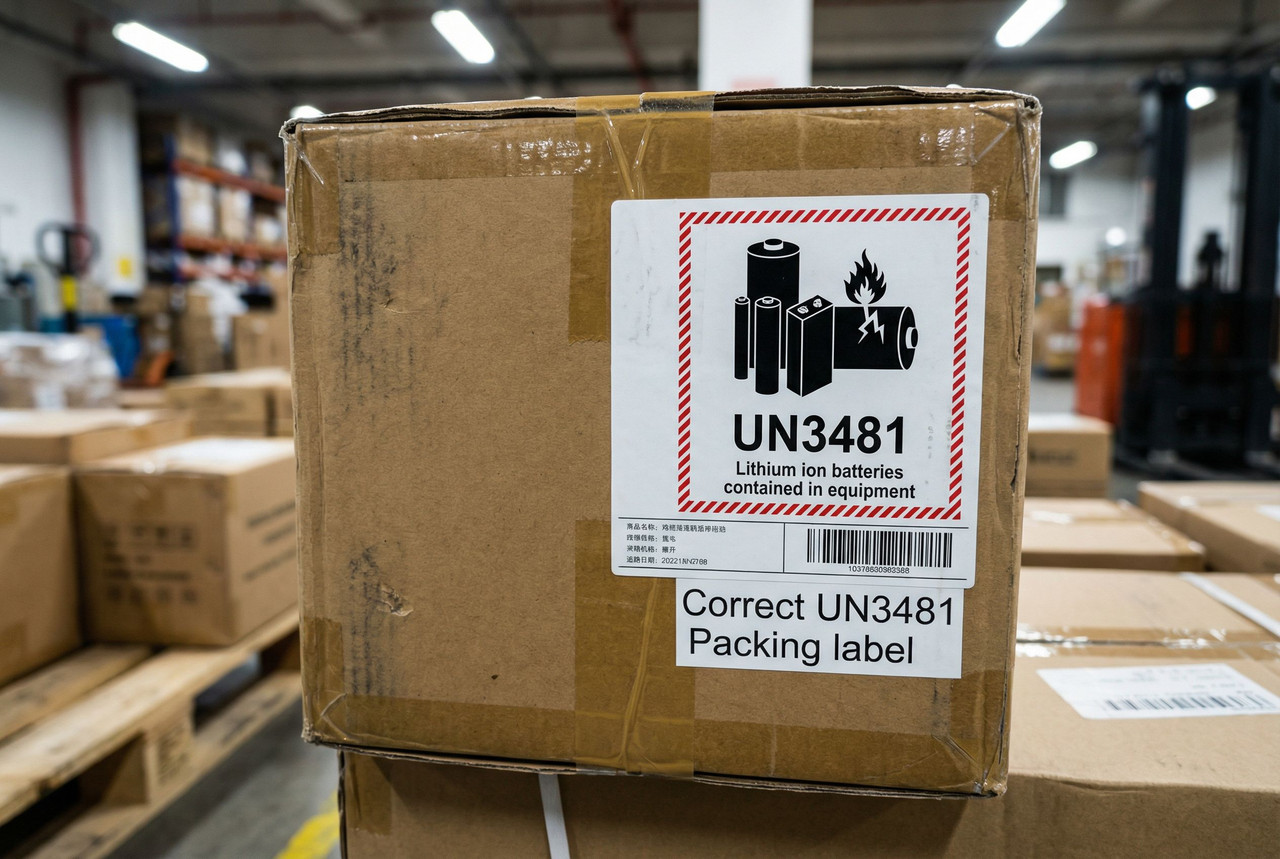
Proper UN3481 lithium battery packaging with required labels
⚠️ Common Mistake:
Sellers often ship battery-powered devices (wireless headphones, portable chargers, electric toothbrushes) without IATA compliance. Even if the battery is "built-in," it still requires proper documentation and labeling. China Post and EMS frequently reject these shipments—use DHL or FedEx with dangerous goods handling instead.
2.2 Liquids – Volume & Content Restrictions
💧 Liquid Shipping Rules (2025):
- • Under 100ml: Generally acceptable for most carriers (perfume samples, essential oils)
- • 100ml - 500ml: Requires special packaging (leak-proof containers, absorbent material) and may be refused by air carriers
- • Over 500ml: Must ship via sea freight or ground transport—air carriers refuse them
- • Alcohol content >24%: Flammable liquid classification (requires DG documentation)
- • Cosmetics & supplements: US FDA registration required, EU CLP labeling required
2.3 Powders – The 2025 "White Powder Rule"
Since 2018, powders have faced extreme scrutiny due to security concerns. In 2025, this has intensified:
🔬 Powder Restrictions:
- • Unidentified white powders: Instant customs detention for testing (7-30 days)
- • Protein powder, baby formula, supplements: Require ingredient declarations and safety certifications
- • Cosmetic powders (makeup, talc): Need labeling with full ingredient list
- • Industrial powders: Chemical safety data sheets (SDS) mandatory
Best practice: Ship powders with complete ingredient documentation, preferably in original branded packaging. Generic white bottles with Chinese-only labels will absolutely get detained.
Section 3: Country-Specific Crackdowns (2025 Updates)
3.1 United States – CBP Type 86 Scrutiny
US Customs and Border Protection (CBP) has massively increased enforcement under Type 86 entry regulations (de minimis shipments under $800):
🇺🇸 US-Specific Restrictions (2025):
- • USMCA fraud detection: CBP now cross-references supplier data to catch false origin declarations
- • Section 321 abuse enforcement: Split shipments to avoid duties now trigger audits
- • FDA compliance: Food, supplements, cosmetics, medical devices require FDA registration (even personal imports)
- • Textile traceability: Apparel from Xinjiang region subject to UFLPA (Uyghur Forced Labor Prevention Act) seizure unless proven otherwise
3.2 European Union – ICS2 Release 3 Data Requirements
The EU's Import Control System 2 (ICS2) Release 3 went live in March 2024, requiring pre-arrival customs data for ALL shipments:
🇪🇺 EU ICS2 Requirements:
- • Entry Summary Declaration (ENS): Required 4 hours before cargo arrival at EU border
- • HS codes mandatory: Every item needs 6-digit HS code classification
- • Shipper & consignee details: Full business registration numbers (EORI for EU entities)
- • Failure to comply: Shipments refused entry or held for weeks whilst data is corrected
Impact: Many Chinese suppliers don't understand ICS2 requirements. Use a freight forwarder with EU customs expertise to avoid costly delays.
3.3 United Kingdom – Post-Brexit Complexity
🇬🇧 UK-Specific Changes (Post-Brexit):
- • GB EORI number required: Both shipper and receiver need UK customs registration
- • VAT on all imports: No more £15 de minimis—VAT charged on everything
- • CE marking no longer valid: Products need UKCA marking for compliance
- • Different rules for Northern Ireland: NI still follows EU rules (dual system complexity)
3.4 Australia – Biosecurity Obsession
🇦🇺 Australia's Strict Biosecurity:
- • Wooden items: ISPM-15 certification mandatory (heat-treated or fumigated)
- • Seeds, plants, soil: Absolutely prohibited without import permits
- • Food products: Extremely strict—even packaged snacks can be rejected
- • Animal products: Leather, wool, fur need veterinary certificates
Consequence: Australia destroys non-compliant shipments—no exceptions, no returns. Always verify biosecurity requirements before shipping.
Section 4: How PFC Express Handles Compliance
Look, navigating these restrictions is genuinely complex—and that's coming from someone who's been doing this professionally for over a decade. Here's how we help our clients stay compliant whilst avoiding expensive mistakes:
🔍 Pre-Shipment Compliance Audit
Before accepting any inventory into our Shenzhen warehouse, we verify:
- • Product classification (HS codes)
- • Dangerous goods status (IATA compliance)
- • Destination country restrictions
- • Required certifications (UN38.3, ISPM-15, FDA, etc.)
If something can't be shipped legally, we'll tell you BEFORE you order 1,000 units.
📋 Documentation Management
We handle the paperwork nightmare:
- • Commercial invoices with accurate valuations
- • Certificate of Origin (when needed)
- • Dangerous Goods Declarations (IATA DG forms)
- • Safety Data Sheets (SDS) for chemicals
- • ICS2 Entry Summary Declarations (EU shipments)
📦 Compliant Packaging & Labeling
Proper packaging prevents rejections:
- • IATA-compliant battery packaging (UN3481)
- • Leak-proof liquid containers with absorbent material
- • Proper hazard labeling (diamonds, pictograms)
- • Country-of-origin marking (Made in China stamps)
🚛 Carrier Selection & Routing
We choose carriers based on restrictions:
- • Dangerous goods: DHL/FedEx only (IATA certified)
- • High-value goods: Insured express shipping
- • Time-critical: Air freight with customs broker support
- • Bulk inventory: Sea freight with proper documentation
Shipping Something Complex? Get Expert Guidance
Our compliance team reviews your products for free and provides a clear "can ship / cannot ship" assessment.
Get Free Compliance CheckFinal Checklist: Before You Ship from China
Use this checklist for EVERY shipment:
Shipping restrictions from China will only get more complex in 2025 and beyond—governments worldwide are tightening import controls, and carriers are increasingly risk-averse. The key to success is working with logistics partners who understand these regulations intimately and can navigate them on your behalf.
If you're unsure whether your product can be shipped, don't guess—reach out to us for a free compliance review. It's far cheaper than dealing with a seized shipment after the fact.
📞 Need Shipping Compliance Help?
Our Shenzhen-based logistics team handles complex compliance requirements daily. Get in touch:
- • Email: sales@parcelfromchina.com
- • Phone: +86 15338777612
- • LinkedIn: Connect with Noel Murphy
TAGS:
About Noel Murphy
Logistics Expert & Ecommerce Consultant