Amazon FBA Shipping from China 2025: Freight Forwarders, Costs, Transit Times & Compliance

Noel Murphy
Logistics Expert & Ecommerce Consultant
2024-09-28
Master Amazon FBA shipping with our definitive 2025 guide. Learn about freight forwarder selection, FBA prep requirements, air vs sea freight costs, Amazon Global Logistics, and how to avoid warehouse rejection.
Here's what separates profitable Amazon FBA sellers from those barely breaking even in 2024: shipping logistics mastery from China to FBA warehouses. I've watched sellers lose 15-25% of their margins to poor freight decisions—using Amazon Global Logistics when a freight forwarder would save 30%, air shipping full containers when sea freight costs 70% less, or failing to prep in China and paying $7/unit at US prep centres instead of $1.50 in Shenzhen.
After coordinating 5,000+ FBA shipments from our Shenzhen facility, I can tell you this: the difference between a 25% margin and a 40% margin often comes down to shipping and prep strategy. Amazon doesn't care if you ship air or sea, use AGL or a forwarder, prep in China or the US—but your bottom line sure does. Let me show you exactly how to optimise every step from factory to FBA warehouse.
📦 Amazon FBA Shipping Quick Facts 2024
💰 Cost Benchmarks
- • Express air: $4.50-6.50/kg (5-7 days)
- • Standard air: $3.00-4.50/kg (10-15 days)
- • Sea FCL: $1,800-2,800 per 20ft (18-25 days)
- • LCL: $80-150/CBM (25-35 days)
- • China FBA prep: $1-3/unit (vs $3-7 US prep)
✅ Compliance Essentials
- • FNSKU labels on every unit (Amazon barcode)
- • Box content labels (6-sided)
- • FBA shipment IDs on all cartons
- • ISF filing 24hrs before vessel departure (sea)
- • Warehouse appointment required (LTL/FTL)
Section 1: Freight Forwarder vs Amazon Global Logistics
This is the first major decision, and most sellers get it wrong. Let's break down when to use each option:
Option 1: Traditional Freight Forwarders
✅ Freight Forwarder Advantages
Cost & Flexibility:
- • 20-30% cheaper than Amazon Global Logistics for most volumes
- • Negotiate rates based on your volume (300kg+ monthly = discounts)
- • Multi-destination flexibility (ship to multiple FBA warehouses + your own warehouse in same shipment)
- • Can combine FBA + non-FBA goods in one container
Prep Services:
- • Full FBA prep in China (labelling, poly-bagging, bundling)
- • Product inspection and QC before shipping
- • Kitting and insert placement ($1-3/unit vs $5-8 in US)
- • Re-packaging into FBA-compliant boxes
- • Photography and listing prep services
🎯 Best For:
- • Small-to-medium sellers (<10 containers/month or <50 CBM monthly)
- • Sellers who need China-based FBA prep to save costs
- • Multi-channel sellers (Amazon + Shopify + wholesale)
- • New sellers who need guidance on FBA compliance
- • Sellers shipping hazmat, oversized, or complex products
Option 2: Amazon Global Logistics (AGL)
📊 Amazon Global Logistics Features
Advantages:
- • Integrated in Seller Central (one-click booking, live tracking)
- • Streamlined documentation (fewer forms to fill)
- • Competitive rates for high-volume sellers (10+ containers/month)
- • Automatic customs clearance through Amazon's IOR
- • Direct delivery to FBA warehouses (no intermediary)
Limitations:
- • No FBA prep services (labelling/poly-bagging done before shipping)
- • FBA-only (can't ship non-Amazon inventory)
- • Less flexible scheduling
- • Limited hazmat/oversized support
- • Higher rates for <10 CBM monthly volume
🎯 Best For:
- • High-volume sellers (10+ containers/month, 50+ CBM)
- • Sellers with China-based teams who can handle FBA prep before shipping
- • FBA-only businesses (no multi-channel fulfilment)
- • Sellers who value Seller Central integration over cost savings
💡 The Hybrid Strategy (Most Cost-Effective)
Many successful sellers use freight forwarders for small/urgent shipments (air freight, <5 CBM) and AGL for large container loads (20ft/40ft FCL). This maximises flexibility whilst capturing AGL's volume discounts on big shipments.
Example: Use freight forwarder for 300kg air shipment restocks every 2 weeks, then use AGL for quarterly 40ft container shipments. Best of both worlds.
Section 2: Air Freight vs Sea Freight for FBA
The air vs sea decision is about balancing cost, speed, and inventory management. Here's the framework:
Air Freight to FBA: Fast but Expensive
✈️ Express Air vs Standard Air
Express Air (DHL/FedEx/UPS)
- • Transit: 5-7 days door-to-FBA warehouse
- • Cost: $5.50-7.50/kg (small volumes <100kg)
- • Cost: $4.50-6.00/kg (300kg+ monthly contract rates)
- • Best for: Urgent restocks, new product launches, test inventory
- • Volume: Economical for <300kg shipments
Standard Air Freight
- • Transit: 10-15 days including customs and drayage
- • Cost: $3.00-4.50/kg (100kg+ shipments)
- • Best for: Regular inventory restocks, 100-1,000kg shipments
- • Sweet spot: 30-40% cheaper than express, only 5-8 days slower
When to Use Air Freight:
- • Stockout emergencies: You're about to run out of inventory (7-10 days remaining)
- • New product launches: Testing market demand before committing to sea freight
- • High-margin products: Products with >50% margin can absorb air freight costs
- • Seasonal peaks: Q4 restocks when sea freight is too slow
- • Small volumes: <5 CBM where sea LCL isn't cost-effective
Sea Freight to FBA: Slow but Economical
🚢 FCL vs LCL for FBA
FCL (Full Container Load)
- • 20ft container: $1,800-2,800 (China → LA/Long Beach)
- • 40ft container: $2,400-3,600 (China → LA)
- • 40ft HC: $2,600-3,800 (extra height for bulky goods)
- • Transit: 18-25 days (West Coast), 28-35 days (East Coast)
- • Capacity: 20ft = ~28 CBM, 40ft = ~58 CBM
- • Best for: 10+ CBM shipments, regular inventory cycles
LCL (Less than Container Load)
- • Cost: $80-150/CBM (China → US West Coast)
- • Cost: $100-180/CBM (China → US East Coast)
- • Transit: 25-35 days (consolidation + deconsolidation)
- • Minimum: 1 CBM (some forwarders 0.5 CBM)
- • Best for: 1-10 CBM shipments, testing sea freight
- • Drawback: Longer transit due to warehouse consolidation
When to Use Sea Freight:
- • Regular inventory cycles: Quarterly or monthly restocks with predictable demand
- • Large volumes: >10 CBM where sea freight costs 60-70% less than air
- • Low-margin products: Products with <30% margin can't afford air freight
- • Bulk orders: New product launches with 1,000+ units initial order
- • Non-urgent restocks: Inventory levels >30 days, no rush needed
The Break-Even Analysis
💰 Air vs Sea Cost Comparison (10 CBM Shipment)
Express Air Freight
- Weight: 10 CBM = ~1,670kg (volumetric)
- Air freight: $5.00/kg × 1,670kg = $8,350
- Customs clearance: $250
- Drayage to FBA: $150
- Total: $8,750
- Transit: 5-7 days
Sea Freight LCL
- Volume: 10 CBM
- LCL: $120/CBM × 10 = $1,200
- Customs clearance: $200
- Drayage to FBA: $400
- Total: $1,800
- Transit: 25-35 days
💡 Sea freight saves $6,950 (79% cheaper) but adds 18-28 days transit
Need Amazon FBA Shipping Expertise?
PFC Express manages 500+ FBA shipments monthly with full prep services in our Shenzhen facility (FNSKU labelling, poly-bagging, QC).
Get FBA Shipping Quote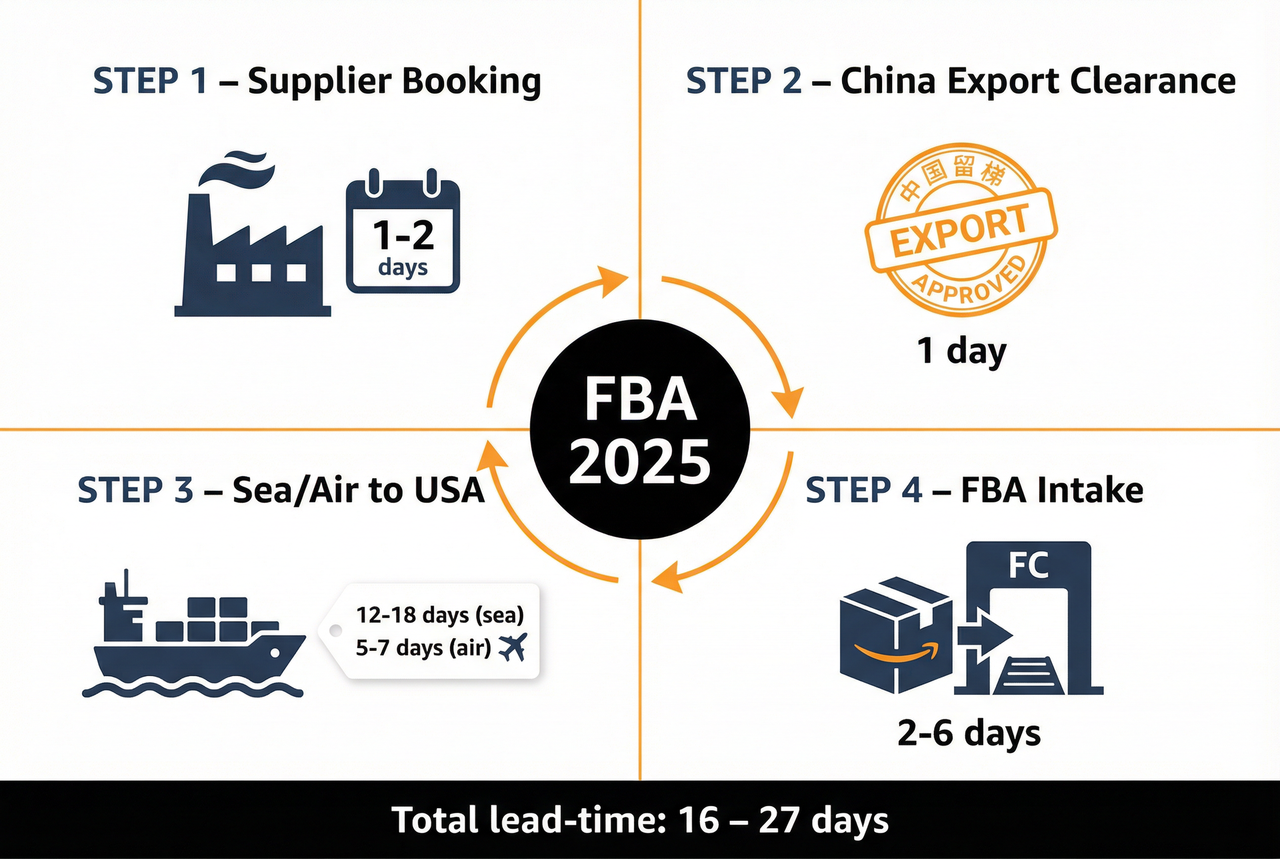
China to FBA Shipping Cycle 2025: Complete workflow from factory pickup to Amazon warehouse delivery
Section 3: FBA Prep Requirements (Critical for Avoiding Rejection)
Amazon FBA warehouses will reject your shipment if prep is incorrect. This costs you storage fees at the warehouse dock ($50-200/day), re-shipping fees to a prep centre ($500-1,500), and 2-4 weeks of lost sales. Here's what you must get right:
FNSKU Labelling (Amazon's Barcode System)
🏷️ FNSKU Requirements (NON-NEGOTIABLE)
- • Every single unit must have Amazon's FNSKU label (not manufacturer barcode)
- • Label size: 1" × 2" minimum (2.54cm × 5.08cm)
- • Barcode clarity: Must scan with 100% accuracy (no smudges, wrinkles, tears)
- • Label placement: On flat surface, not over seams or curves, not covering existing barcodes
- • Poly-bagged items: Label goes OUTSIDE the poly bag (visible without opening)
- • Label colour: Black barcode on white background (no colour labels)
❌ Common rejection reasons:
- • FNSKU label missing or damaged
- • Manufacturer barcode not covered (Amazon scans wrong barcode)
- • Label placed over existing barcode (causes scan errors)
- • Label size too small (can't scan from distance)
Poly-Bagging Requirements
🛍️ When Poly-Bagging is Required
- • Loose products: Textiles, plush toys, anything without retail packaging
- • Fragile items: Glassware, ceramics (poly bag + bubble wrap)
- • Products with small parts: Jewellery, accessories, anything with loose components
- • Items that open easily: Books, journals (if not shrink-wrapped)
Poly-Bag Specifications:
- • Material: 1.5 mil (38 micron) clear polyethylene minimum
- • Suffocation warning: REQUIRED if bag opening ≥5 inches (12.7cm)
- • Barcode visibility: FNSKU label must be on outside of bag (not inside)
- • Sealed edges: All openings sealed (heat seal or adhesive strip)
- • Bag size: Must fit product snugly (no excessive empty space)
Box Content Labelling (Carton Labels)
📦 FBA Carton Label Requirements
- • 6-sided labelling: FBA shipment ID label on ALL 4 sides + top + bottom
- • Label content: "FBA Shipment: [Shipment ID]", quantity, contents description
- • Label size: 3.33" × 4" (8.5cm × 10cm) minimum
- • Barcode placement: Box ID barcode on side panel (not top/bottom)
- • Weight limits: 50 lbs (22.7kg) per box unless marked "Team Lift" (over 50 lbs) or "Mech Lift Required" (over 100 lbs)
- • Box dimensions: Maximum 25" (63.5cm) on any side unless oversized approval obtained
China FBA Prep vs US Prep Centres
💰 Cost Comparison: China Prep vs US Prep
China-Based FBA Prep
- FNSKU labelling: $0.10-0.20/unit
- Poly-bagging: $0.15-0.30/unit
- Bubble wrap: $0.20-0.40/unit
- Bundling (2-pack): $0.30-0.50/unit
- Insert placement: $0.10-0.15/unit
- QC inspection: $0.50-1.00/unit
- Average: $1.00-2.50/unit
US Prep Centre
- FNSKU labelling: $0.40-0.60/unit
- Poly-bagging: $0.50-0.80/unit
- Bubble wrap: $0.75-1.50/unit
- Bundling (2-pack): $1.00-2.00/unit
- Insert placement: $0.40-0.60/unit
- QC inspection: $1.50-3.00/unit
- Average: $3.00-7.00/unit
💡 China prep saves $2.00-4.50/unit (50-70% savings)
🎯 Break-even calculation: If you're shipping 1,000 units, China prep saves $2,000-4,500. Even if air freight costs $500 more than sea, you're still ahead $1,500-4,000 by prepping in China before shipping.
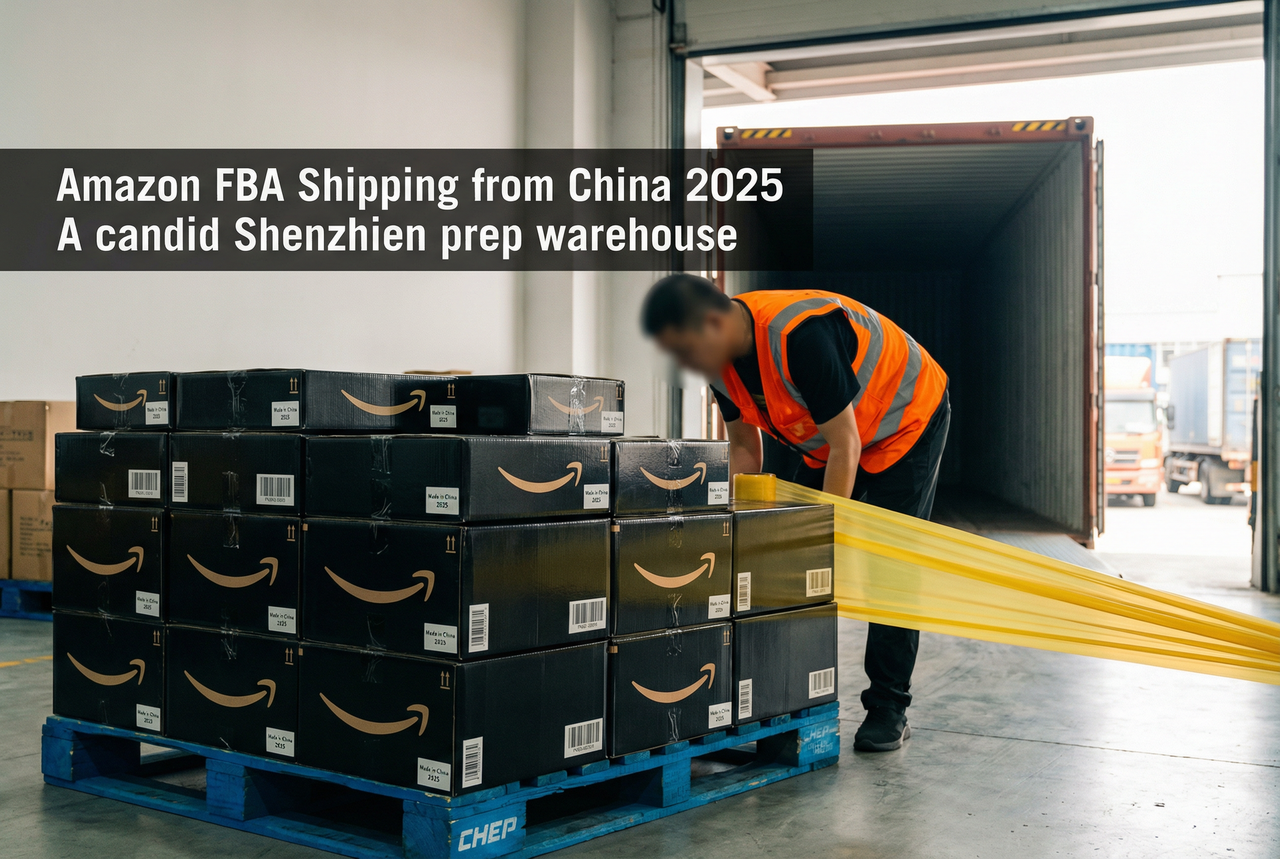
Professional FBA prep facility in Shenzhen: FNSKU labelling, poly-bagging, and QC inspection services at China pricing
Section 4: Customs Clearance & Documentation
US customs clearance for FBA shipments requires accuracy and completeness. Missing or incorrect docs = detention, storage fees, and CBP fines. Here's what you need:
Required Customs Documents
📋 Mandatory for ALL FBA Shipments
- 1. Commercial Invoice: Detailed list of goods with HS codes, quantities, unit values, total CIF value. Must match packing list exactly.
- 2. Packing List: Carton-by-carton breakdown with weights, dimensions, contents. Must show which units are in which boxes.
- 3. Bill of Lading (sea) or Air Waybill: Shipping document proving ownership and delivery instructions.
- 4. Importer of Record (IOR): Your US business entity (EIN), or use freight forwarder's IOR service ($150-300/shipment).
- 5. ISF Filing (sea freight only): Importer Security Filing (10+2 data) submitted 24 hours BEFORE vessel departure. CBP fine: $5,000 if late/missing.
- 6. Entry Summary (CBP Form 7501): Filed by customs broker within 10 days of cargo release. Shows duties paid.
ISF Filing: The $5,000 Mistake
🚨 ISF Filing Critical Rules
- Deadline: 24 hours BEFORE vessel departure from China port (not arrival in US)
- Who files: Your freight forwarder or customs broker (not you directly)
- Data required: 10 data elements (manufacturer, consignee, ship-to address, HS codes, etc.)
- Late filing penalty: $5,000 per violation from CBP
- No ISF on air freight: Only required for ocean shipments
💡 Pro Tip: Provide ISF data to your freight forwarder 3-5 days BEFORE vessel departure. Last-minute ISF filings (filed with only 24-30 hours to spare) have higher error rates and can delay your shipment if corrections are needed.
Section 5: Drayage & Final Mile to FBA Warehouse
Getting your cargo from the US port (LA/Long Beach) or airport to the FBA warehouse is called drayage. This is where many sellers encounter surprise costs and delays:
Drayage Options & Costs
🚚 LTL (Less-Than-Truckload)
- • Volume: 1-10 pallets (1-15 CBM)
- • Cost: $200-600 depending on distance
- • Transit: 2-5 days from port to FBA warehouse
- • Appointment required: YES (book 3-5 days ahead)
- • Best for: Small shipments, multiple drop-offs
🚛 FTL (Full Truckload)
- • Volume: 10+ pallets (15+ CBM), or full container
- • Cost: $400-1,200 (cheaper per CBM than LTL)
- • Transit: 1-3 days direct from port to FBA
- • Appointment required: YES (book 5-7 days ahead)
- • Best for: Full container loads (20ft/40ft FCL)
FBA Warehouse Appointments (Don't Miss This)
⏰ Amazon Appointment Requirements
Amazon FBA warehouses require appointments for LTL and FTL deliveries. Missing your appointment = rejection at the dock, $50-200/day storage fees whilst you reschedule.
- 1. Create shipment in Seller Central: Get FBA shipment IDs and BOL details
- 2. Book appointment: Via Seller Central or carrier portal (3-5 days ahead minimum)
- 3. Provide PRO number: Carrier tracking number from your freight forwarder/drayage company
- 4. Confirm delivery window: 2-4 hour window (must arrive on time)
💡 Peak season (Sep-Dec): Book appointments 7-10 days ahead. FBA warehouses fill up fast during Q4.
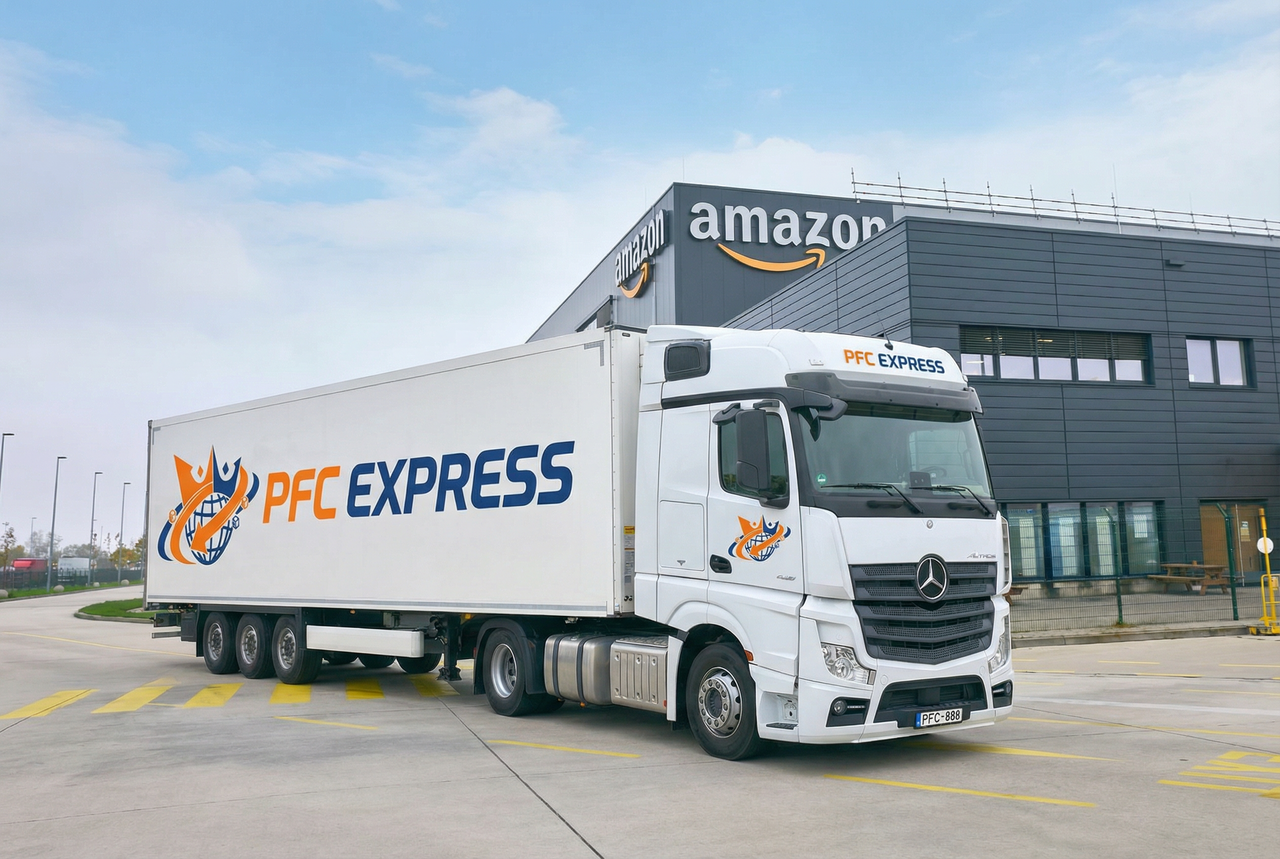
PFC Express truck delivering to Amazon FBA warehouse: Professional drayage and appointment coordination services
Section 6: Choosing the Right Freight Forwarder
Not all freight forwarders are FBA experts. Here's what to look for:
✅ Top 5 Qualities of FBA Freight Forwarders
1. FBA-Specific Experience
Should handle 100+ FBA shipments monthly, understand Amazon's prep requirements, know which warehouses reject frequently, and have established relationships with drayage carriers serving FBA locations.
2. China-Based Prep Services
Offers FNSKU labelling, poly-bagging, bundling, and QC in their Shenzhen/Guangzhou warehouse. Should have prep pricing of $1-3/unit, not $5-7/unit (that's US pricing).
3. Transparent Pricing
Clear breakdown of freight, customs, ISF, drayage, and prep costs. No hidden "documentation fees" or surprise charges. Should provide all-in quotes (freight + customs + drayage to FBA warehouse door).
4. Multi-Channel Support
Can handle FBA + your own warehouse + direct-to-customer shipments from the same container. Flexibility to split shipments across multiple destinations.
5. Volume Discounts
Negotiable rates starting at 300kg/month for air, 5 CBM/month for LCL, 1 container/quarter for FCL. Should offer 10-20% discounts for consistent monthly volume.
Ready to Optimise Your FBA Logistics?
PFC Express manages end-to-end FBA shipping with prep services in Shenzhen, competitive air/sea rates, and expert customs clearance.
Get FBA Shipping QuoteFinal Thoughts: FBA Logistics as Competitive Advantage
Most Amazon sellers view shipping as a necessary evil—something to minimise and outsource completely. But the sellers making 35-45% margins (vs 20-25% for their competitors) treat logistics as a core competency. They prep in China to save $3-5/unit. They use sea freight for 80% of inventory and air freight for only urgent restocks. They negotiate freight rates quarterly based on volume. They understand FBA compliance inside-out and never pay rejection fees.
You don't need to become a logistics expert yourself—but you DO need to work with freight forwarders who specialise in FBA, understand your margin structure, and can recommend the optimal air/sea mix based on your inventory velocity. That's the difference between a sustainable FBA business and one that bleeds money on shipping.
📞 Ready to Master FBA Logistics?
Our Shenzhen facility handles 500+ FBA shipments monthly for sellers at all stages (first container → 50 containers/month). We offer:
- • Complete FBA prep (FNSKU, poly-bagging, bundling, QC) at $1-3/unit
- • Express air freight from $4.50/kg (300kg+ contract rates)
- • Sea freight FCL/LCL with full customs clearance and ISF filing
- • Drayage coordination and FBA warehouse appointment booking
Contact PFC Express:
- • Email: sales@parcelfromchina.com
- • Phone: +86 15338777612
- • LinkedIn: Connect with Noel Murphy
TAGS:
About Noel Murphy
Logistics Expert & Ecommerce Consultant