Express Shipping from China 2025: The Definitive Speed & Cost Guide

Noel Murphy
Logistics Expert & Ecommerce Consultant
2024-12-15
Master DHL, FedEx, UPS, and Special Lines. Learn how to avoid volumetric weight traps, remote area fees, and hidden surcharges whilst getting the fastest delivery from China.
"I need it there yesterday." We hear this at least three times a day at our Shenzhen facility. In the world of dropshipping and Just-In-Time inventory, speed is cash. But here's the uncomfortable truth: speed is also the most expensive line item on your invoice, and most sellers are paying far more than they should.
The landscape of express shipping from China has shifted dramatically in 2025. It's no longer just about the "Big 3" (DHL, FedEx, UPS). New hybrid options called "Special Lines," shifting fuel costs, and aggressive volumetric weight calculations have completely changed the maths. After negotiating rates with every major carrier for over a decade, I'm going to show you exactly where you're losing money—and how to fix it.
⚡ Quick Summary: Who Wins in 2025?
For pure speed (2-4 days), DHL Express remains king, but carries the highest price tag. For heavier bulk shipments (>21kg), UPS Expedited offers better rates. However, the smart money in 2025 is on "Special Lines" (like PFC Express), which offer 5-8 day delivery at 40% less cost than traditional couriers.
- Speed: DHL (Europe/US)
- Heavy Goods: UPS / FedEx
- E-Commerce: Special Lines
- Fuel Surcharge (Changes Weekly)
- Remote Area Fees (£30+)
- Volumetric Weight (Divisor 5000)
The "Big 3" Showdown (Plus SF Express)
Let's examine the titans of express logistics. These are door-to-door services where the courier handles customs (mostly) and last-mile delivery. Each has specific strengths that matter more in 2025 than ever before:
| Carrier | Avg Time (CN to US/EU) | Best For | Cost Level |
|---|---|---|---|
| DHL Express | 2 - 4 Days | Urgent Docs, Small Parcels (< 20kg) | £££££ |
| FedEx IP | 3 - 5 Days | North America / SE Asia | ££££ |
| UPS Saver | 4 - 6 Days | Heavy Shipments (> 21kg) | £££ |
| SF Express | 5 - 8 Days | Cheaper alternative to Big 3 | ££ |
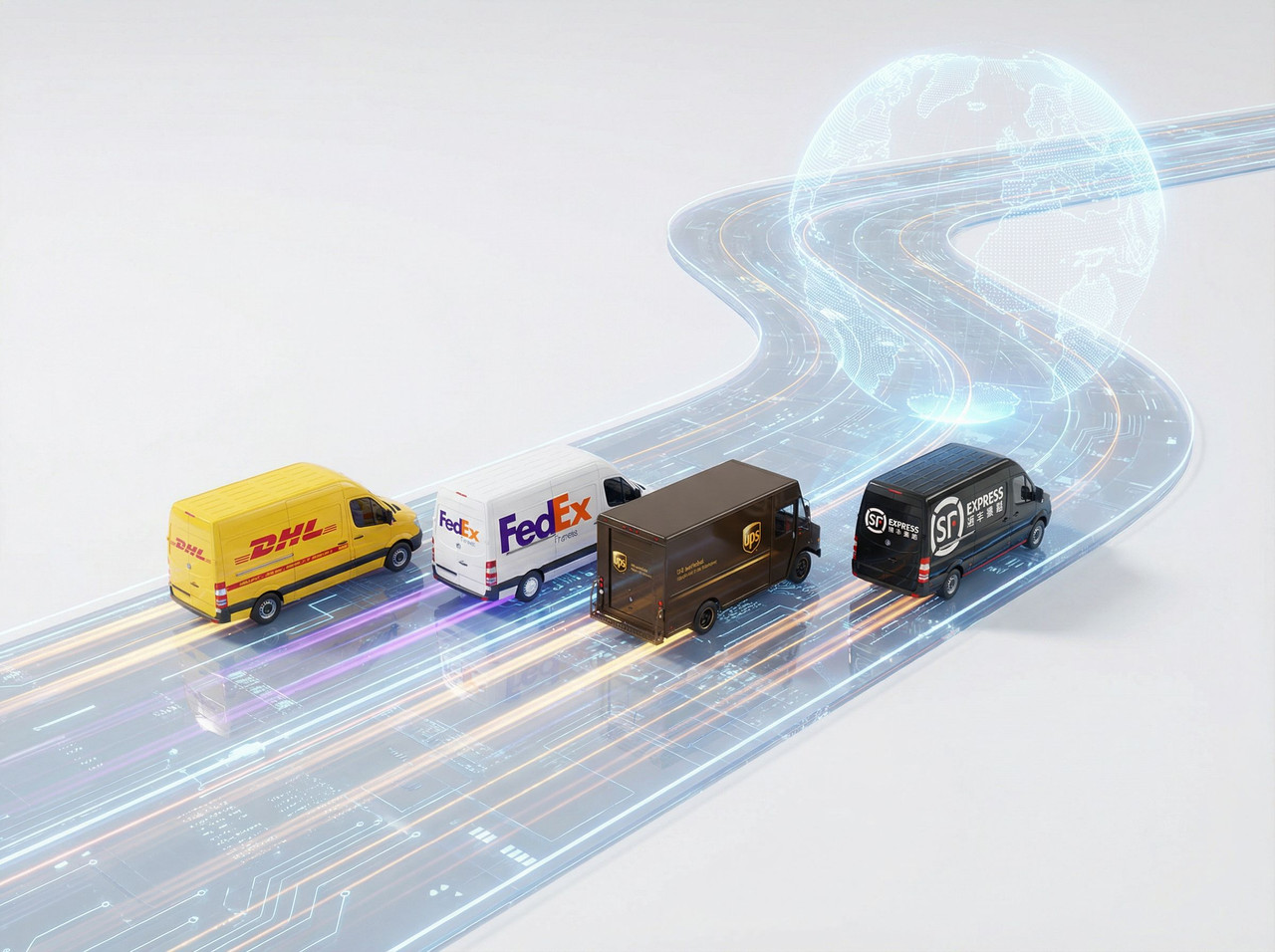
The global logistics race: DHL dominates Europe, whilst FedEx is king in North America
DHL: The Speed King
If you're shipping to Europe or the Middle East, DHL is unbeatable. Their customs clearance in Germany (Leipzig hub) is legendary for its speed—packages clear customs in under 6 hours on average. However, they're aggressive on volumetric weight pricing, which can sting badly if you're shipping anything bulky.
FedEx: The American Giant
FedEx "International Priority" (IP) is the gold standard for USA delivery, particularly to the West Coast where their Memphis hub provides exceptional speed. Critical note: Avoid FedEx "Economy" (IE) if you're in a rush—despite the "Express" label, it can sometimes take 8-10 days as it routes through slower networks.
The Volumetric Weight Trap (Divisor 5000)
This is where 50% of new importers lose money without realising it. Express couriers don't charge based on what your package weighs—they charge based on how much space it takes up on the plane. And the formula is brutal:
🧮 The Volumetric Weight Formula
(Length × Width × Height in cm) ÷ 5000 = Volumetric Weight (kg)
Real Example: Large Teddy Bear
- • Actual weight: 1kg
- • Dimensions: 50cm × 50cm × 50cm
- • Calculation: (50 × 50 × 50) ÷ 5000 = 25kg
- • Result: DHL charges you for 25kg, not 1kg. That's a £200 difference.
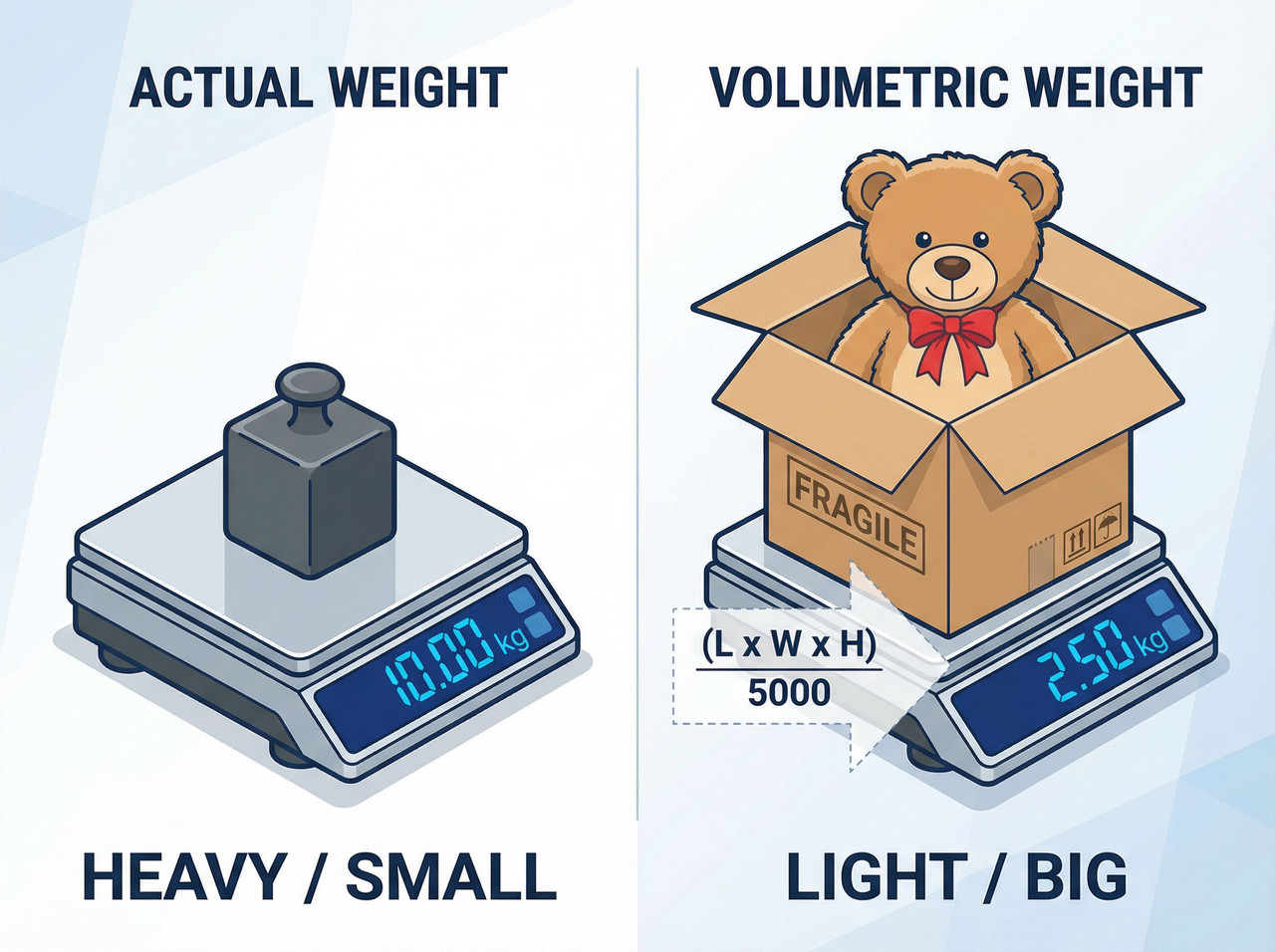
Always calculate volumetric weight before shipping. If Volumetric > Actual, you pay for Volumetric
💡 Pro Tip: How to Beat Volumetric Weight
- • Vacuum pack textiles: Reduces volume by 60-70%
- • Use tight-fitting boxes: Every extra centimetre costs you money
- • Choose Special Lines: Many use divisor 6000 or 8000 instead of 5000
- • Split shipments smartly: Two smaller boxes might be cheaper than one large box
The "Special Line" Revolution
In 2025, the smartest shippers are moving away from direct couriers for ecommerce parcels. Enter Special Lines (also called "Direct Injection" or "Postal Injection")—and they're genuinely revolutionary for cost-conscious sellers.
How Special Lines Work
We consolidate thousands of packages at our Shenzhen warehouse, fly them in bulk to the destination country (e.g., JFK Airport, Heathrow, Charles de Gaulle), clear customs as a single consignment, and then inject them into the local postal network (USPS, Royal Mail, Colissimo).
✅ Why Special Lines Are Brilliant
- No Fuel Surcharge Volatility: Prices are usually flat-rate, unlike DHL which changes weekly
- DDP (Delivered Duty Paid): Taxes prepaid, so your customer never gets a surprise bill
- Divisor 6000: Many special lines use friendlier divisors (6000 or 8000), making them 20% cheaper for bulky items
- No Remote Area Fees: Postal networks have universal coverage obligations
Hidden Costs: The "Surcharge" Minefield
The price you see on the DHL website is rarely the price you pay. This is the single biggest complaint I hear from new importers: "Why is my invoice 40% higher than the quote?" Here's why:
Fuel Surcharge (FSC)
Indexed to oil prices, fluctuates between 15% and 25% on top of the base rate. Updates every single week. In January 2025, DHL's FSC hit 23.5%—the highest in 18 months.
Remote Area Surcharge (RAS)
If your customer lives in the Swiss Alps, Australian Outback, or even rural USA, expect a flat fee of ~£35 added instantly. Check the postcode before quoting shipping!
Address Correction Fee
Wrong postcode? That's a £15 penalty. Automated address validation is mandatory in 2025.
Oversize Fee
Any side longer than 120cm triggers a massive surcharge. Palletise smartly or split shipments.
Battery Surcharge
As lithium batteries require special handling, expect a per-kg surcharge on Express lines.
The "Remote Area" Trap Explained
Many shippers get absolutely burned by Remote Area Surcharge (RAS). And here's the bit that surprises people: this isn't just for islands or mountaintops. The definition of "remote" is shockingly broad:
🗺️ What Counts as "Remote"?
- • Canada: Anything outside Toronto/Vancouver/Montreal
- • Australia: Beyond major coastal cities (Sydney, Melbourne, Brisbane)
- • USA: Rural counties, Appalachia, Mountain West
- • UK: Scottish Highlands, Cornwall, rural Wales
- • Europe: Alps region, Scandinavian countryside
✅ How to Avoid RAS
- • Use EMS or Special Lines: Postal networks rarely charge RAS
- • Check postcodes first: All carriers have RAS lookup tools
- • Factor it into pricing: Add £35 buffer for rural areas
- • Offer local pickup: Partner with pickup points in remote areas
Documentation Checklist for Express Shipping
Speed means absolutely nothing if customs holds your package for a week. To ensure "Express" actually means Express, your Commercial Invoice must be perfect. Here's what separates smooth clearance from week-long delays:
❌ Descriptions That Trigger Delays
- • "Toy" (too vague)
- • "Sample" (triggers inspection)
- • "Parts" (what parts?)
- • "Gift" (still needs declared value)
- • "Personal effects" (rejected for commercial)
✅ Descriptions That Clear Fast
- • "Plastic Action Figure (PVC)"
- • "Men's Cotton T-Shirt, Size L"
- • "Replacement Phone Screen (LCD)"
- • "Wireless Bluetooth Earbuds"
- • "Stainless Steel Water Bottle 500ml"
DDP vs DDU: Who Pays the Tax?
DDU (Delivered Duty Unpaid)
The standard for Express. The receiver pays tax upon arrival. If they refuse, the package is destroyed or returned at YOUR cost.
Use when: B2B shipments where buyer expects to pay duties
DDP (Delivered Duty Paid)
You pay the tax upfront. This is preferred for ecommerce dropshipping as it guarantees smooth customer experience.
Use when: B2C shipments where customer experience matters
Compare 50+ Shipping Rates Instantly
Don't guess the best rate. Get live comparisons of DHL, FedEx, UPS, and Special Lines for your exact shipment.
Get Instant QuoteReal-World Cost Comparison
Let me show you actual numbers from shipments we processed last week. This is the difference between guessing and knowing:
📦 Scenario 1: Dropshipping Order (2kg, 30×30×30cm)
| Carrier | Transit Time | All-In Cost |
|---|---|---|
| DHL Express | 3 days | £58 |
| FedEx IP | 4 days | £52 |
| PFC Special Line | 7 days | £22 |
💰 Savings using Special Line: £36 per shipment. On 1,000 orders: £36,000 saved.
📦 Scenario 2: Amazon FBA Restock (25kg pallet)
| Carrier | Transit Time | All-In Cost |
|---|---|---|
| DHL Express | 3 days | £385 |
| UPS Saver | 5 days | £280 |
| Air Freight | 8 days | £195 |
💡 For Amazon FBA inventory, UPS is the sweet spot—faster than air freight, cheaper than DHL.
Choosing Your Lane: The 2025 Decision Matrix
After processing millions of shipments, here's my honest recommendation framework:
🚀 Use DHL/FedEx Express When:
- ✅ Shipping £5,000+ prototypes or legal documents
- ✅ Trade show deadline in 3 days
- ✅ Critical replacement parts for production line
- ✅ Customer paying premium for guaranteed speed
📦 Use UPS/FedEx Economy When:
- ✅ Heavy shipments >21kg (better rates per kg)
- ✅ Amazon FBA inventory restocking
- ✅ B2B bulk orders with flexible timelines
- ✅ Consolidation of multiple SKUs
💰 Use Special Lines When:
- ✅ Dropshipping 100+ orders monthly
- ✅ Ecommerce with tight margins (<40%)
- ✅ Customers accept 7-10 day delivery
- ✅ Want DDP (no surprise bills for customers)
The reality? Most successful sellers use a hybrid strategy. We ship urgent orders via DHL, regular orders via Special Lines, and bulk restocks via UPS. Don't commit to one carrier for everything—that's leaving money on the table.
📞 Need Expert Guidance?
Our Shenzhen logistics team analyses your shipping profile and recommends the optimal carrier mix. Get in touch:
- • Email: sales@parcelfromchina.com
- • Phone: +86 15338777612
- • LinkedIn: Connect with Noel Murphy
TAGS:
About Noel Murphy
Logistics Expert & Ecommerce Consultant